Efficient material handling plays a key role in maintaining productivity and safety within manufacturing and engineering environments. While many facilities rely on forklifts or manual handling for everyday lifting tasks, these approaches are not always the most efficient solution.
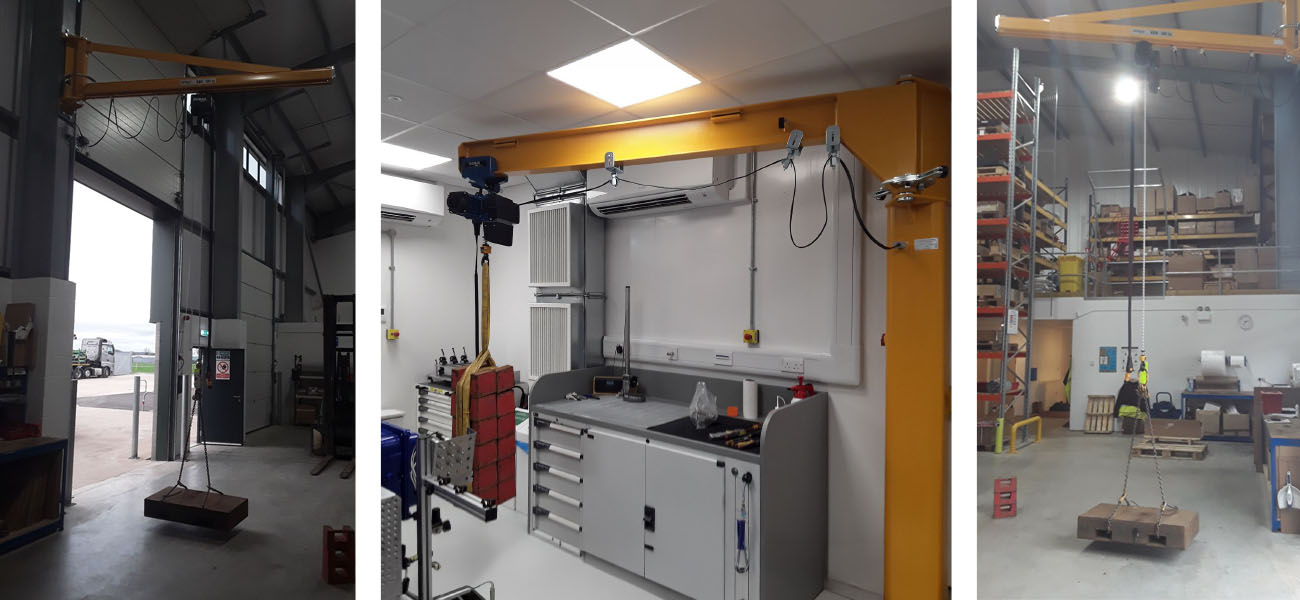
A jib crane is designed to support lifting within a defined working area, making it particularly useful for workstation-based operations. If lifting tasks are becoming slower, less efficient, or more physically demanding for staff, it may be time to consider whether a jib crane could improve the workflow.
Here are five signs that your facility may benefit from installing a workstation jib crane.
1. Repetitive Lifting at Workstations
One of the most common jib crane applications is handling loads at fixed workstations. If operators regularly lift components onto machines, workbenches, or assembly stations, a jib crane can significantly improve efficiency.
By positioning a crane directly over the workstation, loads can be lifted quickly and precisely without the need for forklifts or additional manual handling.
2. Over-Reliance on Forklifts for Small Lifting Tasks
Forklifts are essential in many facilities, but they are not always the most suitable tool for smaller or repetitive lifting operations. Using forklifts for routine workstation tasks can slow down production and introduce unnecessary congestion on the factory floor.
Installing an industrial jib crane allows operators to manage lifting tasks independently, freeing up forklifts for larger material handling duties.
3. Limited Lifting Coverage in Certain Areas
In many facilities, lifting equipment is concentrated in specific areas, leaving other workstations without proper lifting support. This often leads to manual handling or inefficient workarounds.
A workstation jib crane can be installed exactly where lifting support is needed, providing dedicated coverage for machine loading, fabrication work, or assembly operations.
4. Slow Machine Loading and Unloading
Machine loading is another area where industrial jib crane benefits become clear. Without suitable lifting equipment nearby, operators may rely on manual handling or wait for forklifts to become available.
A jib crane positioned at the machine allows loads to be lifted and positioned quickly, helping reduce cycle times and improve overall production flow.
5. Increasing Focus on Workplace Safety
Health and safety requirements are an important consideration in any manufacturing environment. Repeated manual lifting of heavy components can increase the risk of workplace injuries and strain.
Implementing a jib crane as part of your lifting strategy can reduce the need for manual handling while improving control and precision during lifting operations.
Improving Lifting Efficiency in Manufacturing
Every facility has unique lifting requirements, and the most effective lifting solutions for manufacturing are those designed around the specific workflow of the operation.
Jib cranes are widely used because they provide a simple, reliable way to support lifting tasks within defined work areas. When properly positioned, they can improve efficiency, reduce manual handling, and support safer material handling practices.
At Lifting Systems, we work with facilities across the UK to design and install lifting equipment that supports their operational needs. Whether you are considering a jib crane for a workstation or looking to improve lifting coverage across your facility, our team can help identify the most suitable solution.
Frequently Asked Questions
What is a jib crane used for?
A jib crane is typically used for lifting and positioning loads within a defined working area, such as a workstation or production line. Common applications include machine loading, assembly work, fabrication processes, and material handling in manufacturing environments.
When should a facility install a jib crane?
A facility should consider installing a jib crane when lifting tasks occur frequently in the same location. They are particularly effective for workstation operations where repetitive lifting slows production or increases the risk of manual handling injuries.
What are the benefits of a workstation jib crane?
A workstation jib crane provides dedicated lifting support exactly where it is needed. This can improve efficiency, reduce reliance on forklifts, and help operators handle loads more safely and precisely.
Can jib cranes be used alongside other lifting equipment?
Yes. Many facilities use jib cranes alongside overhead cranes or gantry cranes to create a more flexible lifting system. Jib cranes support workstation tasks, while larger crane systems handle heavier or wider lifting requirements across the facility.